How long will my appointment last?
Appointments can last up to 50 minutes. Some dogs will not need the whole appointment time.
Can anyone book a hydrotherapy appointment?
Written consent is required from a veterinary surgeon. The physiotherapist cannot treat undiagnosed lameness/ pain/ new symptoms. If your dog has already been diagnosed with a condition and you are frequently reviewing their pain levels with the vet, they may be able to give consent without booking a face-to-face appointment.
Will my dog swim or use an underwater treadmill?
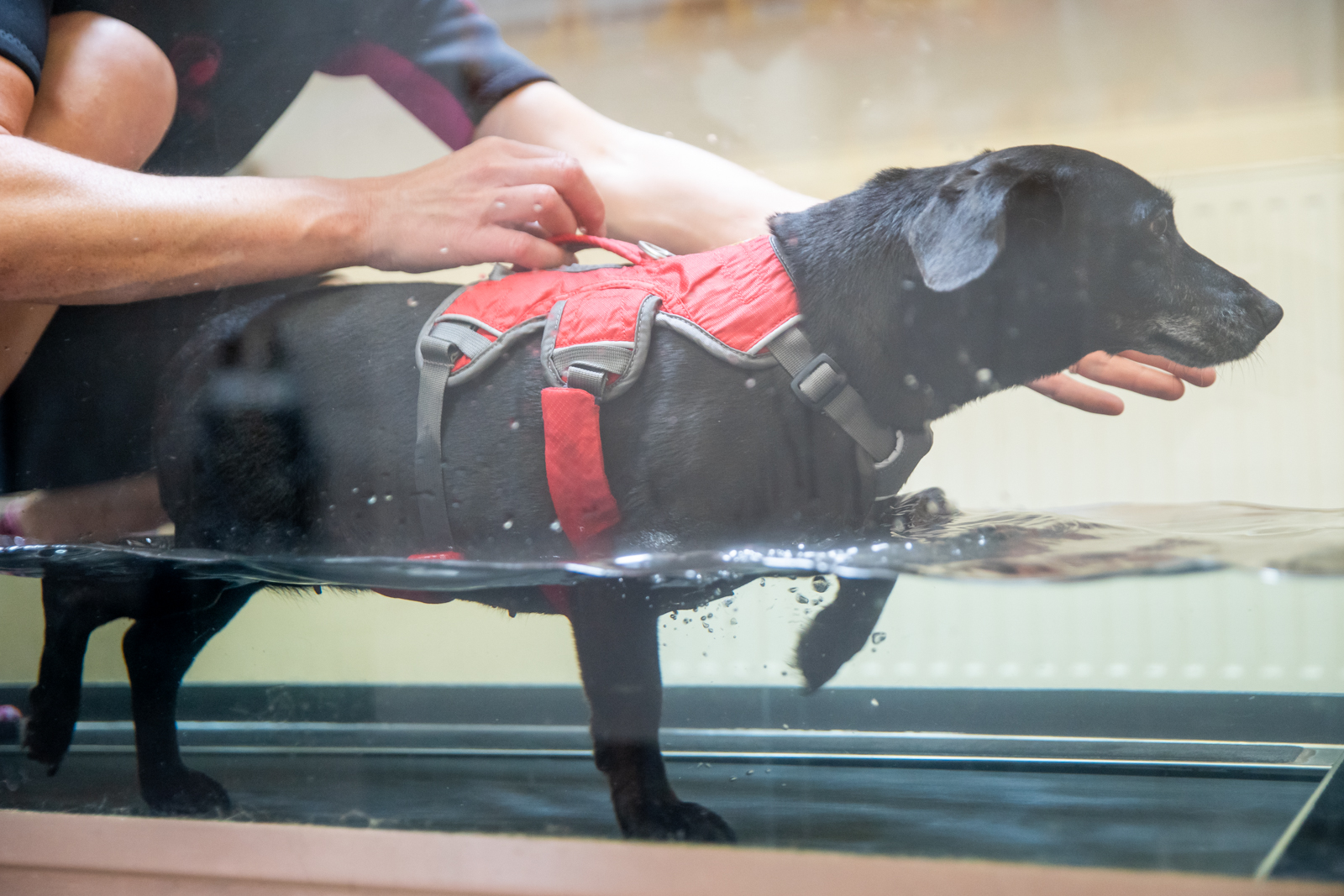
We have an underwater treadmill, a physiotherapy room and a space for class 4 laser therapy.
Can I stay and watch my dog?
Most dogs benefit from the presence of their owner and we ask that owners participate in encouraging their dog to walk in the treadmill. In some cases, the dog is better with the owners out of the room. This can be discussed at your initial appointment.
What happens at my initial assessment appointment?
The first appointment will be primarily to assess the dog on land, introduce them to the treadmill and make a plan. The physiotherapist will examine the dog’s posture, gait, muscle mass and tone, joint range of motion and neurological deficits where applicable. We will demonstrate and prescribe home exercises and discuss home management techniques to suit your dog. We will encourage your dog to walk through the treadmill with rewards to make it a good experience for them. We will only fill the treadmill with water and start the belt if the dog is confident and happy but often this session is used for desensitisation.
What happens during a follow-up hydrotherapy appointment?
We begin with a short assessment followed by physiotherapy treatment suited to your dog. Physiotherapy treatment can include LASER therapy, massage, stretching, strengthening / mobility exercises. Before the dog goes in the treadmill, they will have a harness fitted and may be showered. The time the dog spends in the treadmill will be gradually increased over time. Dogs are then rinsed off and towel dried.
How many sessions will my dog need?
Session frequency will depend on the individual and can be discussed at the initial appointment. We usually begin with 6-10 weekly sessions which can then be tapered off or potentially signed off completely for post-surgical dogs.
What qualifications does the therapist have?
Our physiotherapist has:
BSc (hons) Veterinary Physiotherapy
SEG Level 3 certificate in Small animal hydrotherapy
SEG level 3 certificate in Advanced aquatic treadmill therapy for small animals
And is registered as a member of the Institute of Registered Veterinary and Animal Physiotherapists (IRVAP).
Is this treatment covered by my insurance?
Most insurance policies have an allowance for complimentary therapies. Some offer a monetary allowance or a set number of sessions. You will need to check your insurance policy to see whether they cover complimentary therapy/ physiotherapy/ hydrotherapy.
Is the water cold?
No! The water is kept between 28-32 degrees Celsius.
Warm water helps relax muscles and reduce stiffness. Warm water can have a calming effect and can help ease chronic pain especially from arthritic joints. Due to this soothing effect (and the support of the water), dogs may feel more comfortable and happier to exercise. Warm water improves circulation which improves oxygen and nutrient delivery to the tissues while removing waste products. This can be particularly helpful during recovery from surgery.
Is chlorinated water safe for dogs?
Yes. We keep the chlorine levels within a specific range to ensure that it kills bacteria but does not harm your dog’s skin or coat with normal exposure. Please let us know if your dog has sensitive skin. As an extra measure, we will use shampoo when we rinse them off after their appointment.
Will my dog be dried off after the appointment?
Your dog will be towel dried at the end of your appointment. Please note they will still be damp when leaving the practice. If your dog suffers from arthritis or experiences stiffness, we strongly recommend that you dry them properly when you get home and avoid letting them settle with a damp coat. Cold and damp can exacerbate joint pain and increase stiffness.
Why does my dog need hydrotherapy?
– Low-impact (joint-friendly) exercise
– Builds muscle strength in a comfortable and supported environment
– Supports weight loss
– Aids neurological recovery (helps retrain movement patterns and coordinate the body)
– Builds confidence- can help to reduce anxiety around using an injured limb by encouraging weight bearing while being supported by the water
– Increases joint range of motion- improving mobility, reducing stiffness
– Improves cardiovascular fitness
– Pain relief- warm water can help to ease painful arthritic joint
Why does my dog need physiotherapy?
Why does my dog need class 4 LASER therapy?